Lawn Fertilizing in Newmarket and Aurora
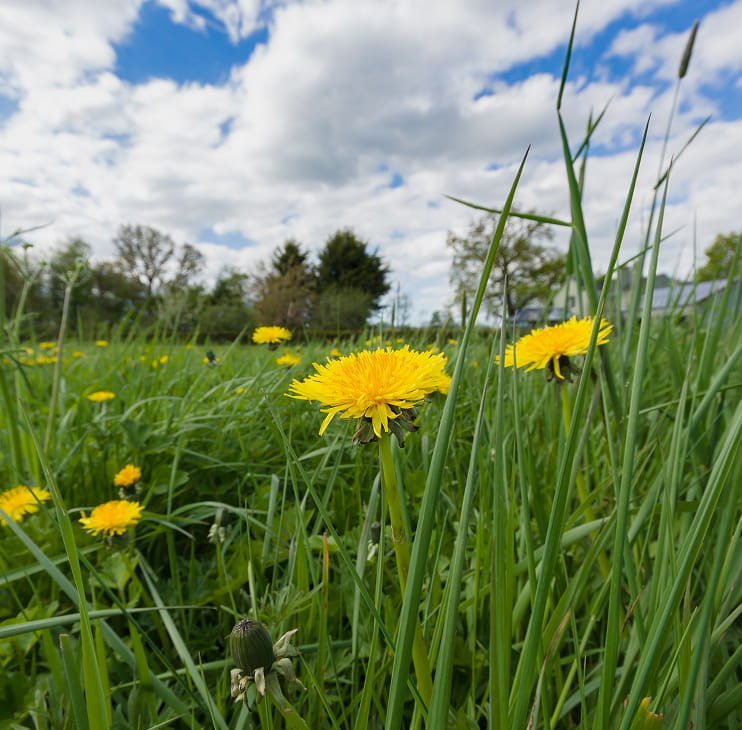
What Most Homeowners Don't Know About Weed Control in Ontario
Ontario has had a Cosmetic Pesticide Ban in place since April 2009. The ban prohibits the use of more than 95 active ingredients and over 250 products for cosmetic purposes on lawns, gardens, and landscaped areas. The harsh chemical herbicides homeowners remember from the 90s, including the original Killex formulations and most products that contained 2,4-D, MCPA, and mecoprop, are no longer legal for use on residential lawns.
This is provincial law. It's been in place for over 15 years. And yet a lot of homeowners still expect that a weed control company will show up and spray their dandelions away in 30 minutes the way it used to work. Any company telling you that's how it still works is operating outside provincial law, and you don't want them on your property.
What we do is the version of weed control that's actually legal under Ontario's framework. After more than a decade of refinement across the industry, it's a more effective long-term approach than the spray-and-walk-away model it replaced. Weed control is one of the four pillars of our Newmarket and Aurora lawn care program, and it's the service where understanding what we use and why matters most.
The Most Important Weed Control Tool Isn't a Product
Here's the part that most companies don't lead with: the single most effective weed control measure isn't applying products at all. It's building a lawn so dense that weeds can't get a roothold in the first place.
Weeds are opportunists. Crabgrass needs bare soil and direct sun on the surface to germinate. Dandelions, plantain, and clover establish in thin areas where the existing grass isn't competing for light, water, and nutrients. A thick, well-maintained lawn creates an environment where weed seeds can't compete.
This is why our weed control program is integrated with the rest of our seasonal lawn care:
- Aeration relieves the soil compaction that thins the lawn and creates the bare spots weeds exploit.
- Overseeding fills bare and thin areas with desirable grass before weeds can establish.
- Proper fertilizing keeps the existing lawn dense and competitive.
- Mowing height at 6 to 8 centimetres (about 3 to 3.5 inches) shades the soil and prevents most annual weeds from germinating.
Customers who treat weed control as an isolated service tend to be disappointed. The weeds come back because the conditions that allowed them are still there. Customers who integrate weed control with the rest of their lawn care see weed pressure drop dramatically over two to three seasons, to the point where active treatment becomes the smaller part of the program.
What's Actually Allowed
Ontario maintains an Allowable List of active ingredients that can be used for cosmetic purposes. The products on the list are what's known as lower-risk pesticides, mostly biological or naturally derived. The ones we actually use:
- Fiesta (iron-based bioherbicide). Fiesta contains iron HEDTA as the active ingredient. Iron is a natural element, and at concentrated doses it's lethal to broadleaf weeds while leaving grass unaffected. We use Fiesta on dandelions, clover, plantain, ground ivy (creeping charlie), and most of the broadleaf weeds homeowners want gone. Visible damage starts within a few hours and the weed is dead within a few days.
- Corn gluten meal. A natural pre-emergent. Applied in early spring, corn gluten meal inhibits root development in germinating weed seeds. It works particularly well against crabgrass and other annual weeds before they emerge, and it adds a small amount of nitrogen to the lawn at the same time.
- Acetic acid (horticultural vinegar) and other contact herbicides. Used selectively on hard surfaces and isolated weeds where their non-selective nature isn't a problem.
What we don't use, because Ontario doesn't allow it for cosmetic use:
- The original Killex (2,4-D, MCPA, and mecoprop blend)
- Glyphosate-based products (Roundup, Wipeout) for cosmetic use on residential lawns
- Most of the broad-spectrum chemical herbicides homeowners remember from before 2009
We're in the Lake Simcoe Watershed
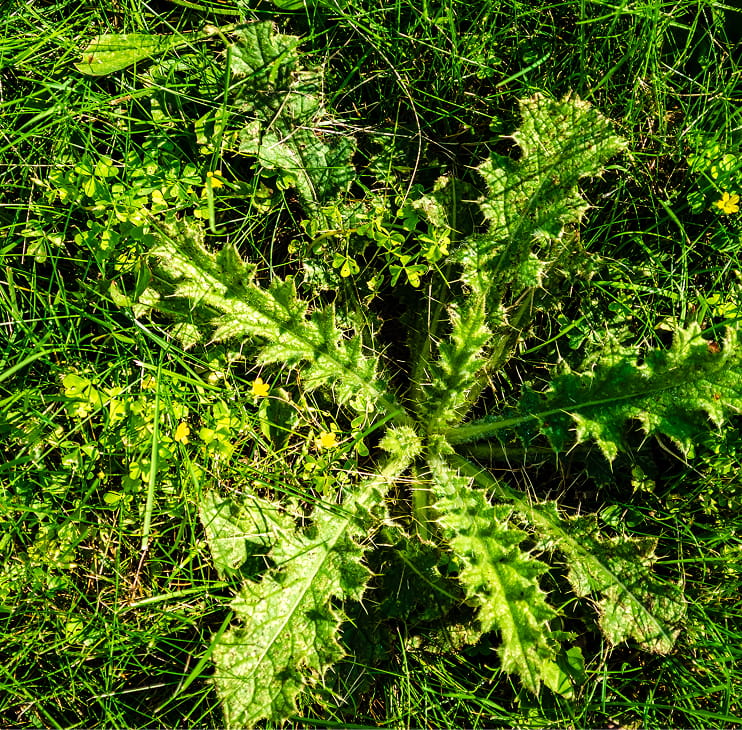
The single biggest local fact about fertilizing lawns in Newmarket and Aurora is also the one most homeowners haven't thought about: water that lands on your lawn doesn't drain south to Lake Ontario the way it does in Toronto. The Oak Ridges Moraine is the watershed divide, and we sit on the north side of it. Your runoff flows through the East Holland River and its tributaries into Lake Simcoe.
The Lake Simcoe Protection Plan, on the books since 2009, sets a 44 tonne per year phosphorus reduction target for the watershed. Lawn fertilizers are explicitly named as a contributor. The Lake Simcoe Region Conservation Authority (LSRCA) recommends phosphate-free fertilizer for properties in the watershed. We pair that with a 6 to 8 centimetre mowing height, which is a common best practice for reducing nutrient runoff from lawns.
This is how we run our program. Every product we use is phosphate-free. Every customer, no exceptions. Established lawns don't need additional phosphorus to be healthy because the soil already contains enough, and adding more just sends the excess into the lake.
The exception is a brand-new lawn being seeded for the first time. New seed does benefit from a starter fertilizer with phosphorus applied directly into the seed bed where it stays put. For established lawns, which is most of what we maintain, phosphate-free is the right call both environmentally and agronomically.
Slow-Release versus Quick-Release
Most consumer fertilizers are quick-release. They dump their nitrogen into the soil within a few days of being applied, the lawn turns dark green for two weeks, and then it fades back to where it started. The lawn isn't actually any healthier. You've bought yourself a temporary colour change and a higher risk of runoff in the meantime.
Slow-release fertilizers (the ones we use) release their nitrogen over six to eight weeks. The lawn greens up gradually and stays that way. The nitrogen is taken up by the plant rather than washing into the storm drain. Slow-release products cost more per bag, but they apply at lower rates and produce better long-term results, so the cost per season works out close to the same.
What to Expect Realistically
A few things customers should know going in:
- Multiple visits per season. Unlike the single-spray model from 20 years ago, the legal Ontario approach involves multiple lower-impact applications across the season. Typically two to four weed control visits per year, integrated with the rest of the program.
- Year one is the hardest. A lawn full of weeds isn't going to be weed-free after one round of Fiesta. The first season focuses on knocking back existing weeds and starting to thicken the turf. The second season is where most customers see dramatic improvement. The third season is where weed pressure drops to the point where treatments become spot work rather than blanket applications.
- Some weeds will always be present. Dandelion seeds blow in from neighbouring properties, parks, and boulevards. The realistic goal is a lawn where weeds are a minor presence rather than the dominant vegetation, not a 100% weed-free lawn. Anyone promising the latter is either using illegal products or stretching the truth.
- Hand-pulling is part of the program. For isolated tough weeds (especially deep-rooted ones like dandelions in their second year), our crews pull by hand rather than spray. It takes longer, but it's more effective on individual mature plants.
Common Weeds We Treat in Newmarket and Aurora
The weed pressure across our area is fairly predictable. The ones we treat most often:
Dandelions
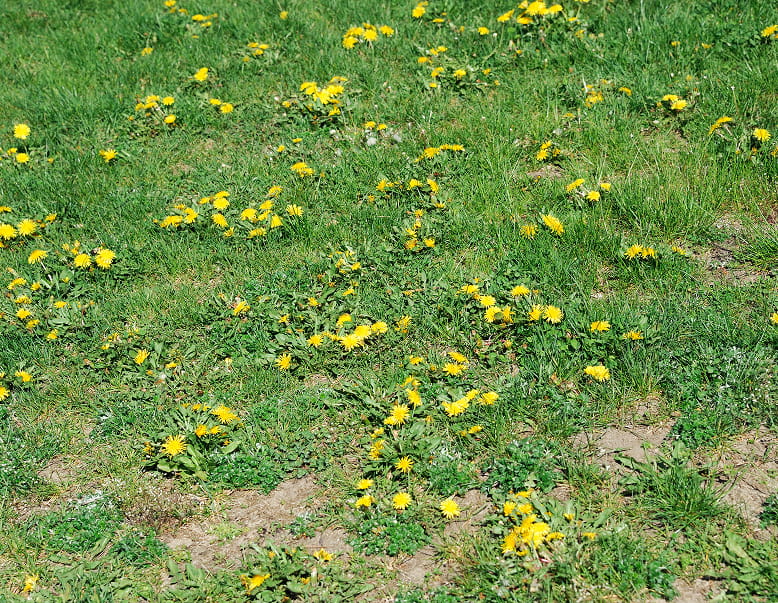
Universal across Newmarket and Aurora. Easy to spot, easy to treat with Fiesta, but persistent because each plant produces hundreds of wind-blown seeds. Spring and fall treatments knock them back, and dense turf prevents new seedlings from establishing.
Clover (white Dutch clover)
Some customers want it gone. Others want it left because it stays green during summer drought, fixes its own nitrogen, and supports pollinators. We do whatever the customer wants. If clover is the goal, we can include microclover seed in the overseeding mix.
Creeping charlie (ground ivy)
A tough one. The waxy leaf surface resists most products, and the runners spread aggressively in shaded, moist areas. Multiple Fiesta applications combined with improving the lawn density usually does it, but it takes more than one season.
Plantain
Common in compacted, hard-packed areas. Treats well with Fiesta. The longer-term fix is aeration to address the compaction the plantain is exploiting.
Crabgrass
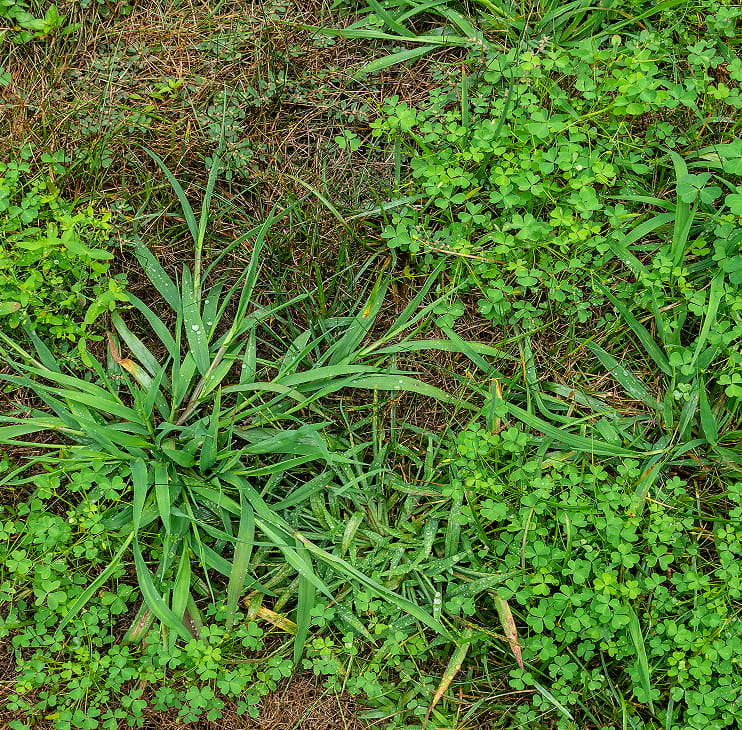
An annual grass weed. Crabgrass has to germinate fresh from seed every year, which makes corn gluten meal in early spring an effective preventive. Once established, crabgrass is harder to remove because grass-on-grass selective herbicides aren't on the Allowable List. Dense overseeding before crabgrass season is the more effective long-term approach.
Yellow nutsedge
Shows up in poorly drained areas. Difficult to control without products that aren't allowed in Ontario for cosmetic use. We address it primarily by improving drainage and lawn density.
Frequently Asked questions
Is your weed control safe for kids and pets?
Yes. Everything we use is on Ontario's Allowable List under the Cosmetic Pesticide Act, which means each product has been evaluated as lower-risk. Fiesta is iron-based, and at the rates we apply, the lawn is safe for kids and pets to walk on once it has dried, usually within a few hours. We provide post-application instructions every time we treat.
Why do you keep saying companies offering the old products are breaking the law?
Because they are. Ontario has prosecuted dozens of cases under the Pesticide Act since 2009, with fines and convictions. Homeowners hiring a company that promises faster results with stronger products are taking on legal exposure they probably aren't aware of, and the products in question carry health and environmental risks that led to the ban in the first place.
Can you guarantee a weed-free lawn?
No, and we wouldn't trust anyone who does. What we can guarantee is a steady reduction in weed pressure over time, using legal products and proper turf management. Most customers see major improvement by the end of their second full season with us.
What about spot-treating just my dandelions?
We can do it. A spot-treatment visit is the lowest-cost way to handle a specific weed problem on an otherwise healthy lawn. Just call to schedule.
Can you treat weeds in my garden beds and walkways?
Yes. Weed control in mulched beds, on walkways, and along driveways uses different products and approaches than lawn weed control. We handle all of it. The Cosmetic Pesticide Ban applies to those areas too, so the same constraints on what's legal apply.
What's the difference between a bioherbicide and a chemical herbicide?
A bioherbicide is derived from a biological or naturally occurring source (iron, corn gluten, certain plant extracts) and works through mechanisms that exist in nature. Chemical herbicides (the ones banned for cosmetic use in Ontario) are synthetic compounds engineered specifically for weed control. Bioherbicides are generally less toxic and break down faster, but they require more applications to achieve the same level of control.
Ready to Take Back Your Lawn from the Weeds?
If your Newmarket or Aurora lawn is more dandelion than grass, or if creeping charlie has taken over the back yard, integrated weed control combined with proper lawn care is the legal, effective way to turn it around. Free quote, no obligation.
Request Your Free Lawn Care Quote Call (905) 503-3000