Lawn Aeration in Newmarket and Aurora
Why Aeration Matters Here
Most lawn problems we see across Newmarket and Aurora start at the soil, not the grass. Compaction is the slow-motion killer. Water can't get in, roots can't push down, fertilizer runs off into the gutter, and the lawn slowly thins out from the bottom up.
The reason it's such a persistent problem in our area comes back to what's underneath the grass. Much of the lower-lying landscape across Newmarket and parts of Aurora is influenced by Newmarket Till, a stony sandy-silt layer that, in our experience, compacts hard under foot traffic, mower wheels, and the freeze-thaw cycle of an Ontario winter. Even properties up on the higher moraine sands compact over time, especially in heavy-traffic areas. By the end of summer, you can stick a screwdriver in a healthy lawn and push it four or five inches down with one hand. Try the same thing in a compacted lawn and you'll be lucky to get an inch.
Core aeration is the fix. It's one of the four pillars of our Newmarket and Aurora lawn care program, and it's the service that does the most for a tired lawn in the shortest amount of time.
- Core aeration is not the same as spike aeration. Spike-style aerators, including the spike shoes you can buy at the hardware store, push soil sideways instead of pulling it out. That makes the compaction worse, not better. We don't use them.
- Plug depth matters. Aerators that only get an inch into the lawn don't accomplish much. Our equipment goes two to three inches deep, which is where the meaningful root growth happens.
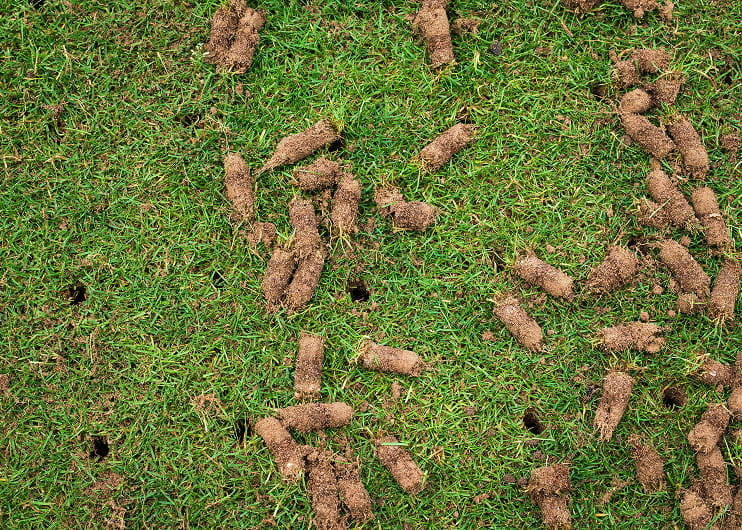
- The plugs stay on the lawn. They look messy for a few days. They're not. As they break down, they return organic matter and microbes to the soil surface, which is part of how aeration improves the lawn over time.
What Core Aeration Actually Is
A core aerator is a walk-behind machine with hollow tines mounted on a rotating drum. As the drum turns, the tines punch into the lawn and pull out small cylinders of soil, called plugs or cores. The plugs get left on the surface to break down naturally over the next week or two.
The result is thousands of two- to three-inch deep openings in the soil. Air, water, and seed can finally reach the root zone. The roots themselves spread sideways into the new openings and grow deeper.
There are a few things about core aeration that are worth knowing:
When to Aerate in Newmarket and Aurora
Fall is the best time for most properties. The grass is in active growth, the soil is moist but not saturated, and the open holes from aeration become ideal seed beds for overseeding right after. We typically run aeration through early to mid-September, lining it up with the September overseed and fertilizer applications described in our seasonal lawn care program.
Spring aeration also has its place. We recommend it for:
- Lawns that take heavy foot traffic (kids, dogs, frequent gatherings)
- Properties with severe compaction where one fall round isn't enough
- Lawns that show standing water for hours after a normal rain
- New sod that's been down two to three years and is starting to thin
The one time we don't aerate is during the heat and stress of mid-summer. Pulling cores when the lawn is fighting drought is asking for damage that won't recover until fall.
Signs Your Newmarket or Aurora Lawn Needs Aeration
There are a few things we look for during a property assessment. Any one of them is enough to recommend aeration:
- Standing water after a normal rain. Healthy soil drains within 30 minutes. Compacted soil holds water for hours.
- The screwdriver test. A standard screwdriver should slide easily four to five inches into the soil. If you're hitting hard resistance at one or two inches, the soil is compacted.
- Hard-packed areas under heavy use. Dog runs, gates, well-trodden paths from the house to the patio. These are always compacted.
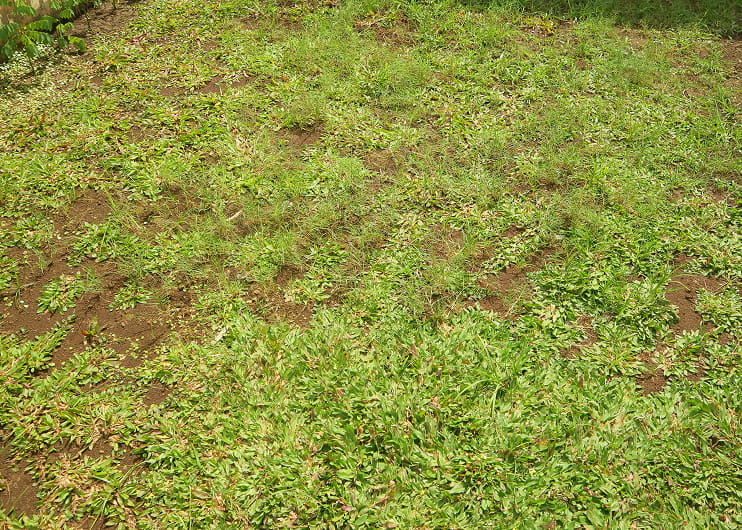
- Thinning grass with no obvious cause. No bug damage, no disease, just a lawn that's slowly losing density. Compaction is usually behind it.
- A thatch layer thicker than half an inch. Thatch and compaction tend to come together, and aeration helps with both.
- Excessive runoff. Water that flows over the lawn and into the street instead of soaking in.
The Process and What to Expect
A typical aeration on a residential property in Newmarket or Aurora takes about an hour, depending on lawn size. Here's what happens:
Before we arrive
We ask homeowners to mark or flag any underground sprinkler heads, invisible dog fence wires, and shallow utility lines. The aerator tines go two to three inches down, and we want to avoid the things that aren't supposed to get hit.
On the day
We mow the lawn first if it's tall. Moist ground aerates better than dry ground, so we want a moderate moisture level. If the property has been through a dry spell, we'll ask the homeowner to give it a deep watering 24 to 48 hours beforehand.
The aeration itself
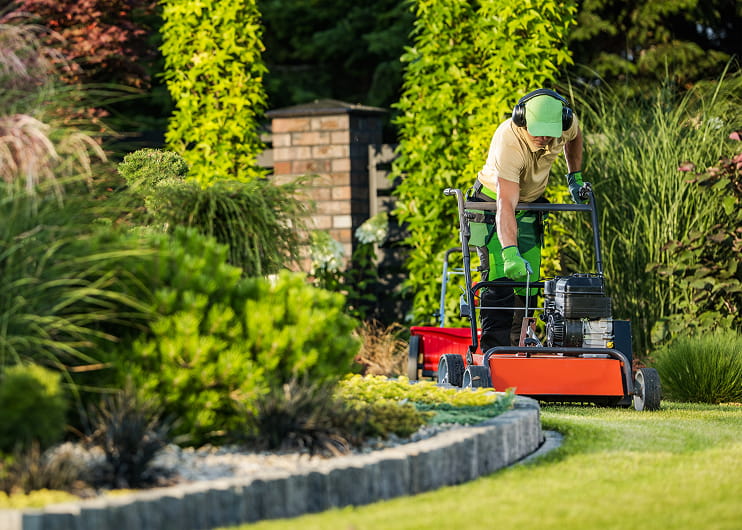
The walk-behind aerator passes over the lawn in a grid pattern. On heavily compacted properties we make a second pass at a right angle to the first. The plugs are left on the surface.
Right after
The lawn looks like it just got a bad case of mole hills. This is normal. The plugs start breaking down within a few days, and within two to three weeks they're gone.
The pairing
We almost always pair aeration with overseeding. The open plugs are perfect seed beds, and the seed-to-soil contact you get from broadcasting into freshly aerated turf is dramatically better than seeding into intact lawn. Our fall fertilizer goes down at the same time, feeding both the existing grass and the new seedlings as they germinate.
Frequently Asked Questions
How often should I aerate my lawn?
Once a year is the right cadence for most properties in Newmarket and Aurora. Heavily compacted lawns or high-traffic properties may benefit from twice a year (spring and fall) for a season or two until the soil structure improves.
Will the aerator damage my sprinkler heads or invisible fence?
Only if we don't know they're there. We ask homeowners to flag them in advance, and we work around them carefully. The tines go down two to three inches, so anything shallower than that is at risk if it's not marked.
Can I aerate myself with a rented machine?
You can. The challenges are timing it correctly (the lawn has to be at the right moisture level), pulling the right plug depth, and following up with overseeding and fertilizer at the right time. For a one-time DIY job it's manageable. For consistent year-over-year results, having it built into a seasonal program tends to produce better lawns.
Do you do aeration as a one-time service?
Yes. A lot of customers start with a one-time fall aeration plus overseed to see how things go before signing on for a full seasonal program. Just let us know what you're looking for.
Will aeration hurt my lawn?
No. The lawn looks rough for a few days because of the plugs on the surface, but the grass itself isn't damaged. Within two to three weeks, the lawn looks better than it did before, and the benefits keep building over the following months.
Why don't you use spike aerators?
Spike aerators push soil sideways and compact it further. They feel like they're doing something because of the holes they leave behind, but they don't address the underlying problem. Core aerators pull soil out, which is what actually relieves compaction.
Ready to Book Your Aeration?
If your Newmarket or Aurora lawn is showing the signs (standing water, thinning grass, hard soil under the screwdriver test), aeration is usually the single most valuable thing you can do for it. Free quote, no obligation.
Get a Quote Call (905) 503-3000